If your company manufactures, transforms or distributes products — especially in food, pharmaceutical or industrial sectors — traceability is not an option but a legal obligation. And yet many companies still manage it with paper, Excel spreadsheets or without recording anything at all. That has consequences: fines, inability to withdraw defective products in time, and loss of certifications.
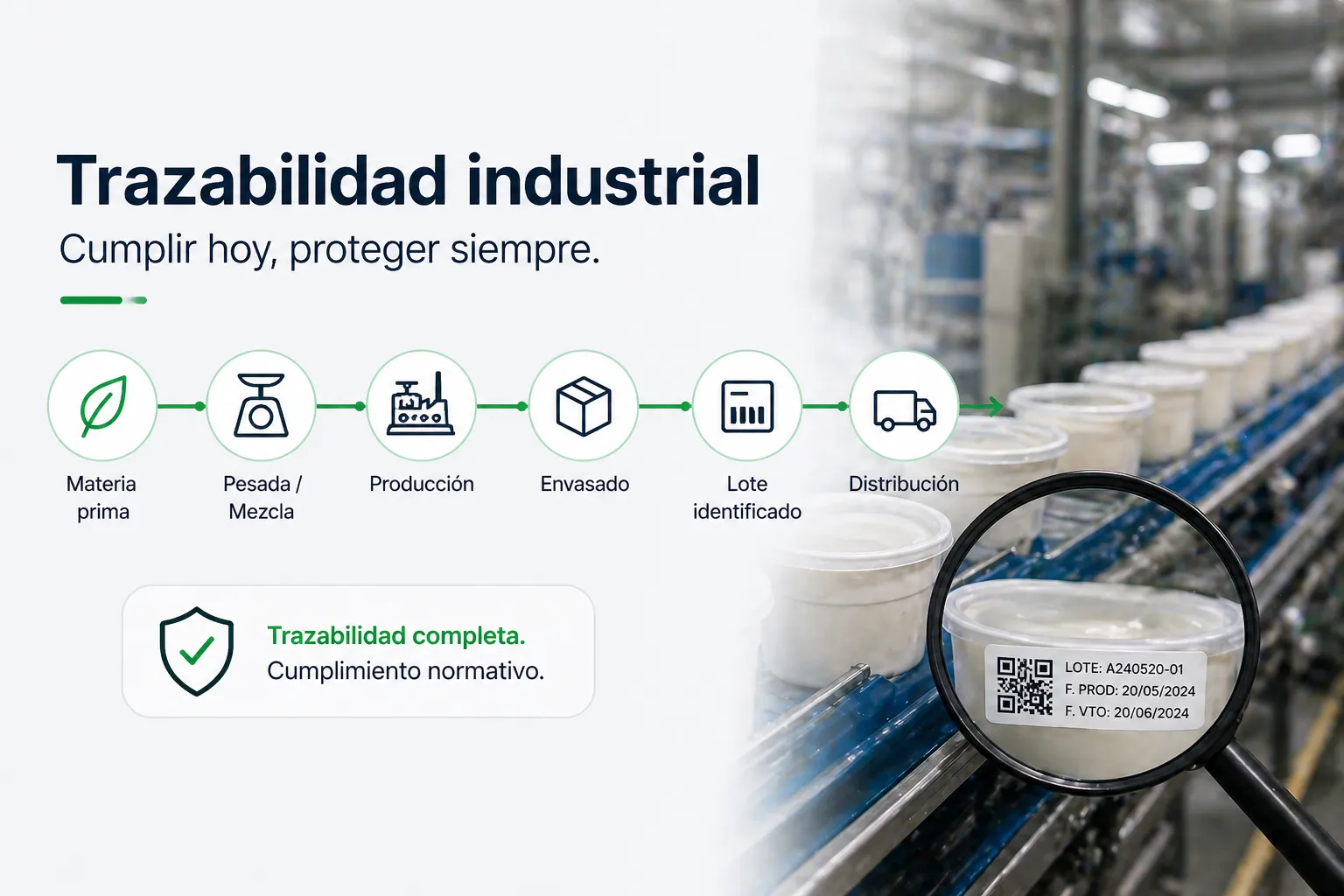
What exactly is traceability?
Traceability is the ability to reconstruct the complete history of a product: where its raw materials came from, how it was processed, who handled it, in what conditions it was stored and who it was sold to. It's like a medical record, but for the products your company manufactures.
There are two types:
- Backward traceability: knowing the origin of the ingredients or components used in a product
- Forward traceability: knowing who each batch was sold or sent to
A complete traceability system allows you to do both in seconds.
What does the law say?
In the food sector, Regulation (EC) 178/2002 establishes the obligation of traceability for all companies in the food chain. A company that cannot demonstrate the traceability of its products during an inspection may face sanctions and temporary closure of operations.
In other sectors such as pharmaceuticals or industrial components, specific regulations require similar levels of control and recording.
What happens if there is a problem with a batch?
This is where traceability demonstrates its real value. If a customer detects a problem in a product, the company must be able to identify within hours — not days — which other products may be affected and withdraw them from the market. Without digital traceability, that process can take weeks and affect products that had no problem at all.
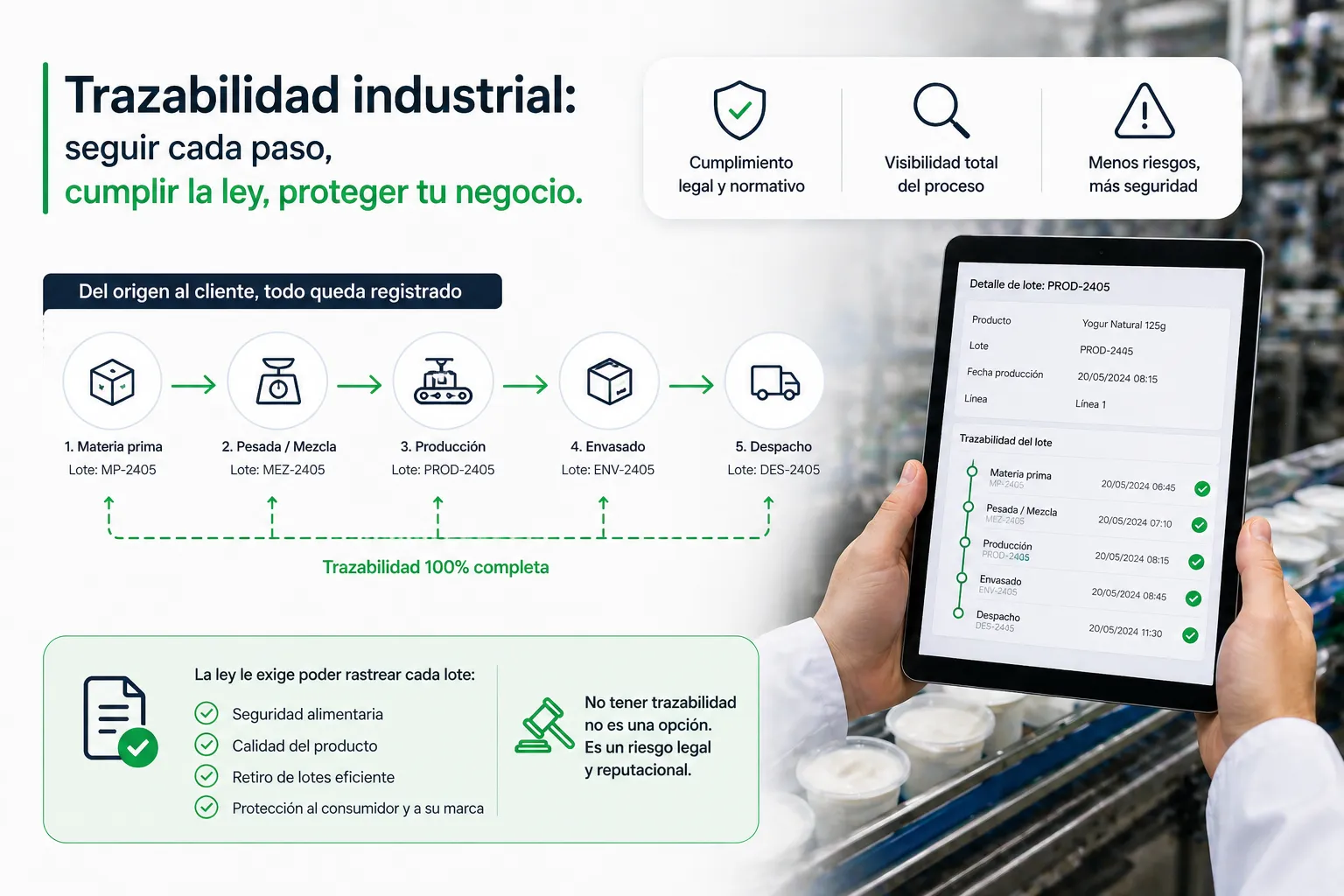
How is a traceability system implemented?
There are solutions for all sizes and budgets. What is never acceptable is paper or Excel: they don't allow fast searches, they deteriorate, get lost, and are not reliably auditable.
At EstructuraBit we have developed EstructuraBit Trace, an industrial traceability system designed for factories and companies that need to record batches, weighings, ingredients and production phases digitally, with touchscreens on the shop floor and automatic report generation.
If your company needs to implement or improve its traceability system, contact us and we'll explain how it works.
Back to blog