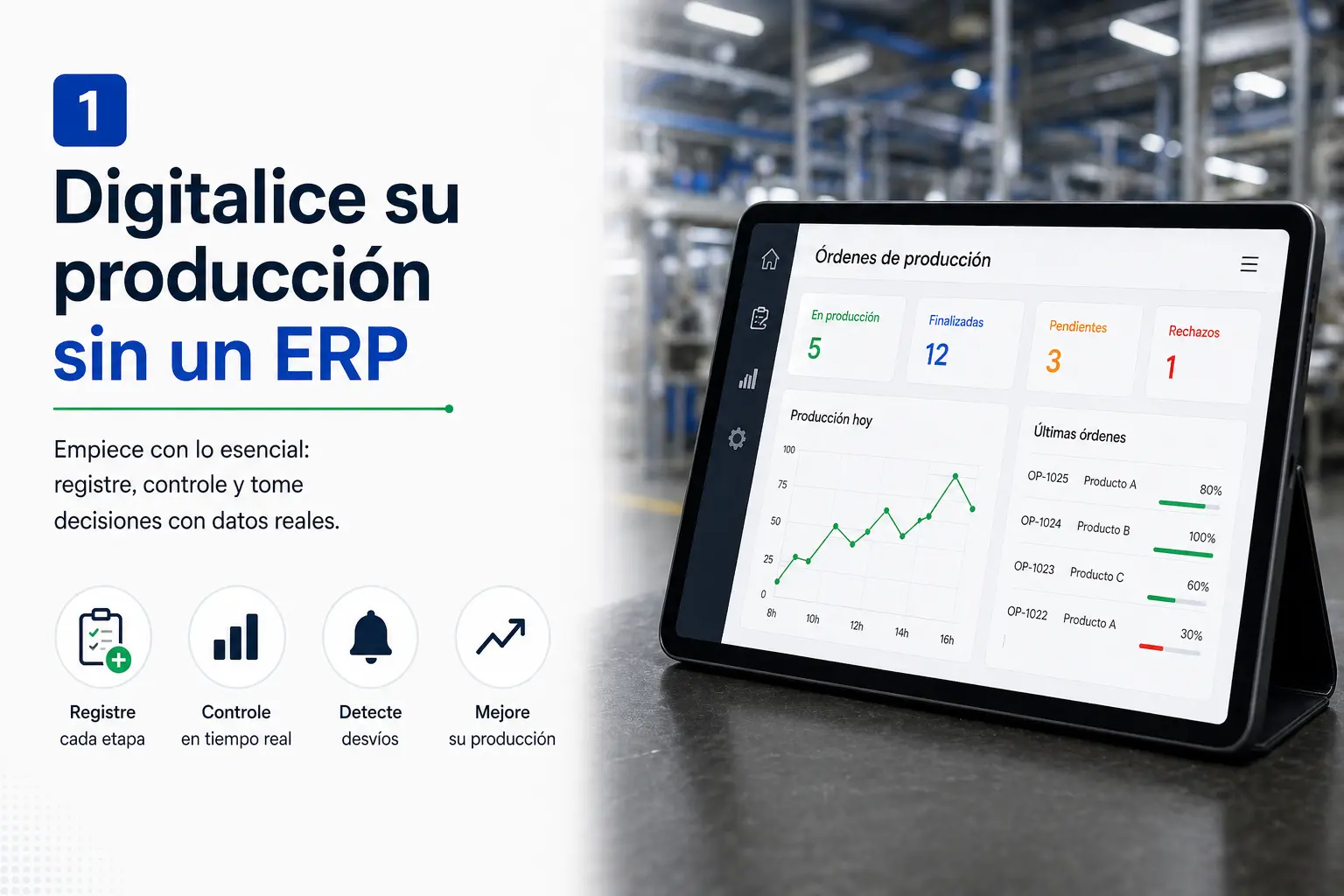
When a small factory decides to digitalise its production control, the first thing that appears in any search is ERP. SAP, Odoo, Microsoft Dynamics. Powerful, comprehensive systems designed for large companies with dedicated teams for their implementation and maintenance. For a factory of 10 or 20 people, an ERP is not the solution: it's an obstacle.
Why ERPs are not the answer for a small factory
ERPs have two fundamental problems for small businesses:
- Cost: ERP implementation costs between €20,000 and €100,000 or more, not counting annual licences and maintenance
- Complexity: they require months of configuration, team training and process adaptation. In a small factory, that paralyses operations
But the real problem you want to solve — knowing what is being produced, how much, under what conditions and with which raw materials — has much more agile and cost-effective solutions.
What is the minimum you need to digitalise?
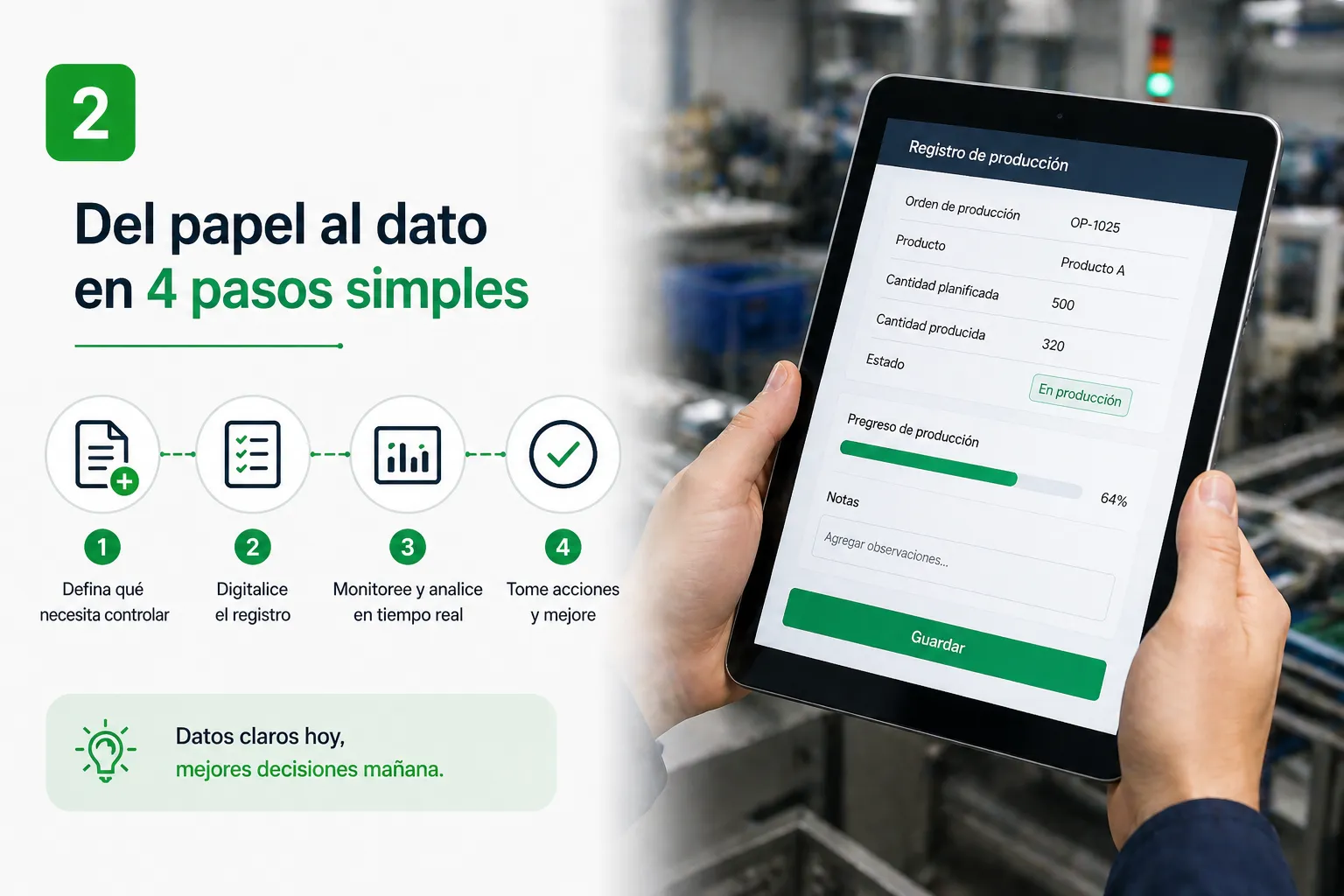
Before talking about tools, you need to identify which processes generate the most problems without digitalisation:
- Production records: what was made, when, in what quantity and who made it
- Raw material control: what was used, from which batch, how much stock remains
- Batch traceability: being able to answer in minutes "which products contain ingredient X from batch Y?"
- Incidents: recording stoppages, rejects and quality problems
With these four elements digitalised, a small factory has real control over its production.
What alternatives exist to an ERP?
Process-specific solutions
Instead of a system that covers everything, specific tools are implemented for each need. A traceability system for batch recording, a warehouse management tool for stock, and a reporting solution for production reports. Each one does its job well and they integrate with each other.
Low-cost bespoke solutions
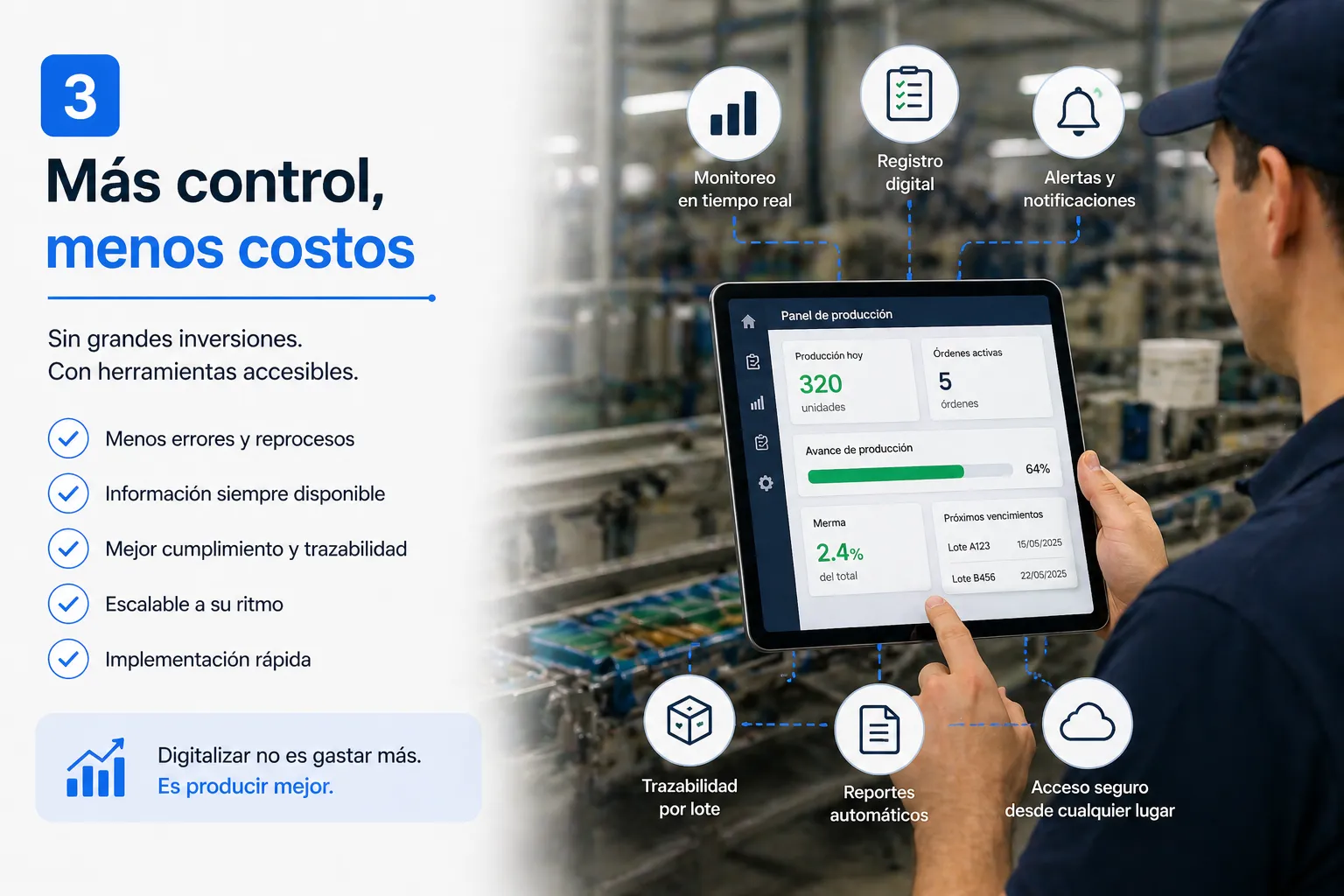
For many small factories, a solution developed specifically for their processes — with touch screens on the floor, QR code recording and automatic report generation — costs between 5 and 10 times less than an ERP and is implemented in weeks rather than months.
A real example
IBKTropic, an industrial confectionery company, went from recording their production on paper to using EstructuraBit Trace on the factory floor. Each time a production run starts, the operator selects the recipe on a touch screen, weighs the ingredients with automatic batch and expiry recording, and the system generates the complete report without additional intervention. More than 45 batches recorded from the first week of use, zero paper and complete traceability in seconds.
Where to start
The most important thing is not to try to digitalise everything at once. The recommendation is to start with the process that causes the most problems — usually production recording or raw material traceability — implement it, stabilise it and then expand. In six months, the factory can have complete digital control without having paralysed operations at any point.
At EstructuraBit we help small factories digitalise their production gradually and without complications. If you'd like to know where we would start in your case, write to us.
Back to blog